
From Talent to Sovereignty
- Home
- From Talent to Sovereignty
FROM TALENT TO SOVEREIGNTY | TAIWAN AI ACADEMY
TAIWAN AI ACADEMY
From Talent to Sovereignty
Taiwan AI Academy and the Architecture of an AI-Ready Nation
A strategic perspective for international leaders in industry, government, academia, and research
By Ming-Shun Tsai, Provost, Taiwan AI Academy;Ling-Jyh Chen, Chief Executive Officer, Taiwan AI Academy
|
Central proposition |
Executive Summary
• Artificial intelligence has become a national capability question, not merely a technology question. Global AI progress is increasingly constrained by talent, organizational readiness, computing access, governance, and the ability to turn domain expertise into deployable systems. The World Economic Forum reports that skills gaps remain the most widely cited barrier to business transformation, while the OECD finds that the current training supply may be insufficient to meet growing demand for both advanced AI expertise and general AI literacy. [1][2]
• Taiwan AI Academy (AIA) was created from the demand side of industry. Its founding logic grew out of industrial pilot work in 2017 led by James C. Liao, H. T. Kung, and the late Sheng-Wei Chen. The team recognized that Taiwan faces many real-world industrial challenges—and that these challenges can be effectively addressed by integrating domain expertise, data, and AI methods. AIA was announced in late 2017 and opened its first classes in January 2018. [3][4]
• AIA has evolved into an institutional bridge across academia, industry, government, and society. By July 2026 the Academy had 13,140 alumni across 167 cohorts, more than 2,300+ enterprises represented in AIA’s alumni network, and 15 major industries, together with 732 senior government officials at civil-service grade 12 or above who had taken part in its programs. It has also supported 31 ministries and agencies in AI Basic Act-related implementation work. [12]
• The Academy’s model now spans three competency layers: Use AI, Build AI, and Govern AI. This reflects a broader change in the AI workforce. AI capability is no longer synonymous with model development. Organizations need broad AI literacy, engineering depth, managerial capacity, governance, and people who can redesign work around AI. AIA’s AI Talent Certification (AIATC) formalizes these pathways. [5]
• AIA’s next chapter is shaped by two long-standing visions and a new infrastructure agenda. AI Democratization seeks to make AI accessible, understandable, and responsibly usable across society. Industry AI-ization aims to turn AI into productivity and competitiveness. In August 2026, AIA released the National AI Infrastructure Initiative (NAII), signed by 20 leaders and experts, proposing domain-specific foundation models, international partnerships, and national-scale AI computing infrastructure as mutually reinforcing pillars of strategic AI capability. [11]
• The ambition goes well beyond being a training provider. AIA can help Taiwan become a global center for AI talent education and applied industrial learning: a place where international partners come not only to study AI but also to learn how it is deployed, governed, and co-created inside one of the world’s densest advanced-technology and manufacturing ecosystems.
Keywords: AI talent development; AI democratization; industrial AI transformation; AI governance; AI sovereignty; national AI infrastructure; international co-creation; Taiwan.
|
AIA at a glance (2026) |
Latest figure / status |
|
Cumulative alumni |
13,140 (July 2026) |
|
Cohorts / classes |
167 |
|
Alumni enterprises |
2,300+ |
|
Industries represented |
15 major sectors |
|
Senior officials trained |
732 at civil-service grade 12 or above |
|
Government ministries/agencies supported |
31 in AI Basic Act-related work |
|
Citizen AI literacy initiative |
95,000+ participation engagements; 7,000+ material requests; 30+ partner organizations; 640+ seed instructors |
|
NAII signatories |
20 (list updated 22 August 2026) |
1. The AI Talent Gap Has Become a National Capability Gap
Artificial intelligence is redefining the sources of national and corporate competitiveness. The first wave of the current AI era was dominated by breakthroughs in deep learning, large language models, and computing scale. The next wave turns on whether institutions can absorb those technologies: whether workers can use them, engineers can build and integrate them, managers can redesign processes around them, public institutions can govern them, and countries can secure the infrastructure needed to sustain strategic capabilities.
This shift matters for Taiwan, a country indispensable to the global semiconductor, server, networking, and advanced manufacturing supply chains. Yet hardware leadership does not automatically translate into AI leadership. A country may build world-class AI servers yet still depend on models developed elsewhere. It may hold deep industrial know-how yet still lack the people to turn that know-how into AI systems. It may have capable engineers yet still lack the organizational machinery to move a prototype into production.
International evidence tells the same story. In the World Economic Forum’s Future of Jobs Report 2025, 63 percent of surveyed employers identified skills gaps as a primary barrier to transformation. The OECD similarly argues that AI adoption is increasing demand at both ends of the capability spectrum: advanced specialists and a much broader population with general AI literacy. Its 2025 policy brief concluded that the supply of AI-related training may not yet be sufficient to meet the growing need for general AI literacy. [1][2]
The policy question is therefore no longer “How many AI engineers does an economy have?” but “How densely is AI capability distributed across citizens, professionals, managers, engineers, enterprises, and public institutions?” For a medium-sized, globally connected economy such as Taiwan, capability density may be more strategically important than population scale.
“AI talent is no longer an output of the education system alone; it is becoming part of national infrastructure.”
2. Why Taiwan AI Academy Was Created: Start from the Factory Floor
The Academy’s origin is worth dwelling on, because it explains how the institution still works. AIA did not begin with a curriculum and then search for students. It began with industrial problems and worked backward to the talent system those problems required.
In March 2017, a team led by Academia Sinica President James C. Liao, Harvard University Professor H. T. Kung, and Academia Sinica researcher Sheng-Wei Chen, who would become the Academy’s founding Chief Executive Officer, worked directly with Taiwanese manufacturers to explore whether AI could solve urgent process problems. The team found strong demand for AI across industry but a consistent bottleneck: firms often did not know how to identify the right problems, prepare the relevant data, or find people who could connect AI methods with domain knowledge. [3][4]
In practice, the team found that many industrial problems could yield workable prototypes within months, provided the problem was well defined and the data existed. The constraint was not a shortage of use cases but a shortage of cross-domain talent. Taiwan had chemical engineers, mechanical engineers, physicians, financial specialists, and manufacturing experts. What it lacked at scale were professionals who could translate their domain expertise into AI problems and work effectively with AI technologies.
Six months of pilot work produced a blunt conclusion: the fastest route to industrial AI adoption was to train existing domain professionals intensively, rather than wait for the degree system to produce a new generation of specialists. The Taiwan AI Academy was announced at the 2017 Taiwan AI and Data Science Conference and opened in January 2018. [3]
That beginning shaped the Academy’s character. AIA was designed from industry demand rather than from the supply side of education, and its success would be measured not in instructional hours or certificates but in whether learners could return to their organizations and define problems, mobilize data, collaborate across disciplines, and create value. H. T. Kung has served as the Academy’s President since it opened.
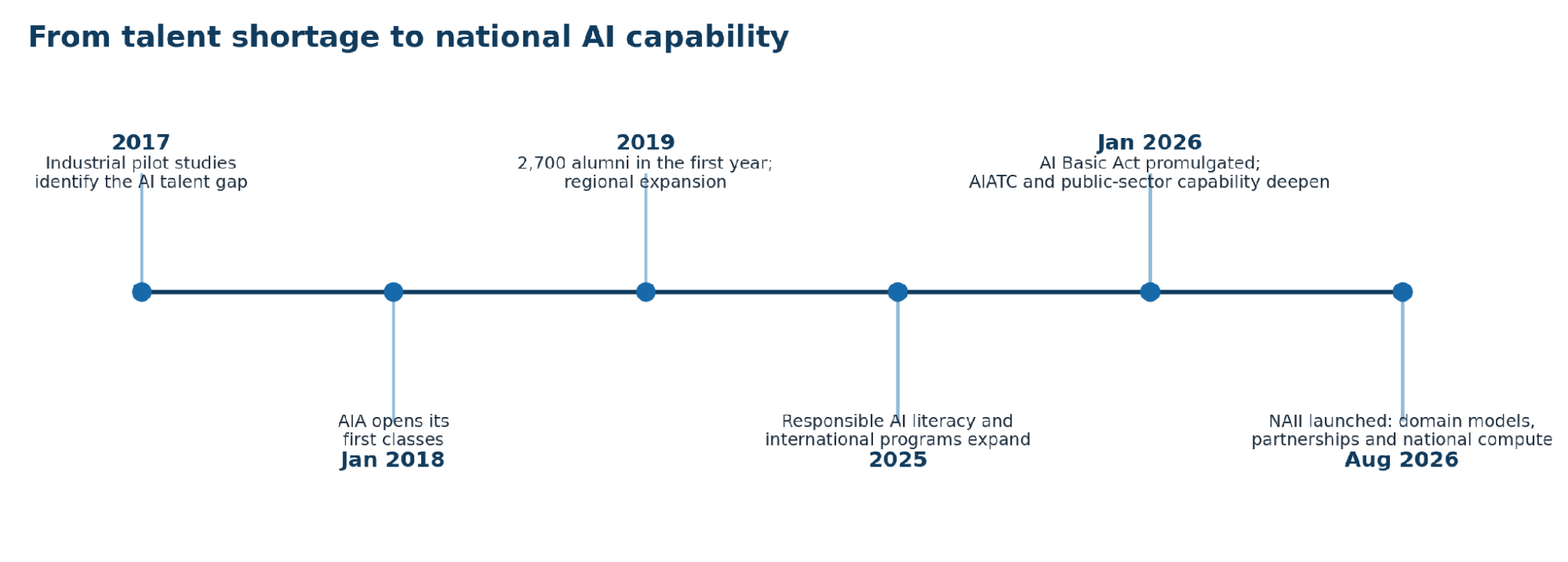
Figure 1. From AI talent shortage to national AI capability
Source: Taiwan AI Academy records; Artificial Intelligence Basic Act; NAII. [3][8][11][12]
|
|
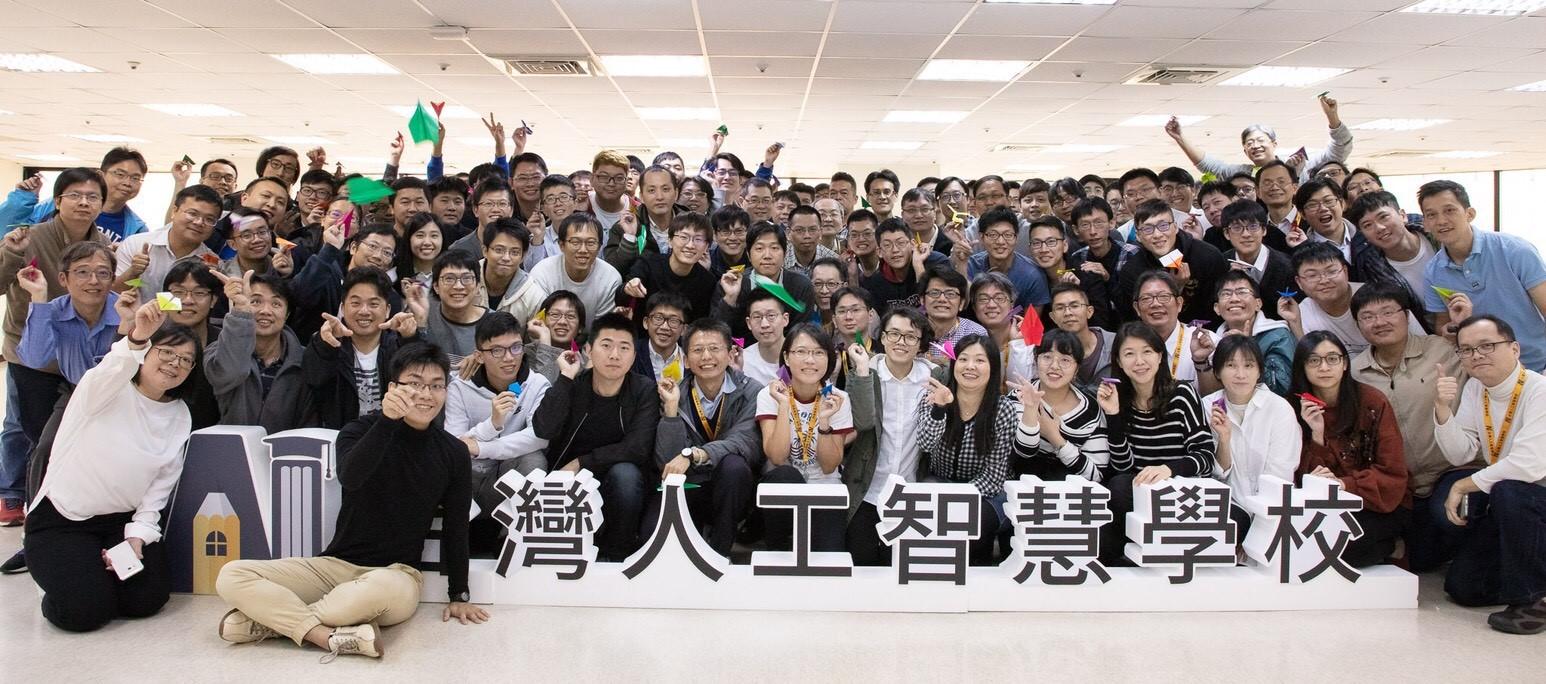
Photo 1. Taiwan AI Academy community and alumni network.
Photo courtesy of Taiwan AI Academy.
3. An Institutional Innovation Between Academia and Industry
AIA is not a conventional university, and it was never intended to be one. It is a nonprofit institution built to operate in the space between academic research, industrial transformation, professional education, and public capability building. This intermediary position is one of its most important design features.
Universities provide scientific depth and long-horizon research. Technology companies bring platforms, engineering tools, and global product ecosystems. Enterprises bring domain expertise, operating data, and real constraints. Government brings policy, public legitimacy, and institutional scale. But these communities speak different languages and run on different timelines. AIA’s role is to translate among them.
The Academy’s programs are therefore modular and role-based rather than degree-based. Technical programs focus on machine learning, large language models, data engineering, and AI system implementation. Industry and managerial programs focus on use-case definition, workflow redesign, investment logic, organizational change, and AI product management. Governance-oriented programs increasingly address risk, accountability, cybersecurity, privacy, responsible use, and board-level oversight.
This architecture is now captured in AIA’s three-part talent framework: Use AI, Build AI, and Govern AI. AIA established its AI Talent Certification (AIATC) in 2024, offering literacy-, engineering-, and management-level certification pathways, and launched a dedicated AIATC website in May 2026. The framework recognizes that an AI-ready organization needs more than technical developers: it needs responsible users, capable builders, and accountable decision-makers. [5]
|
Capability pathway |
Primary audience |
Core capability |
|
Use AI |
General workforce, students, professionals |
AI literacy, effective use, verification, data awareness, responsible use, and productivity |
|
Build AI |
Engineers, developers, data professionals |
Models, LLMs, RAG, agents, data engineering, deployment, and system integration |
|
Govern AI |
Managers, executives, boards, public-sector leaders |
Strategy, risk, accountability, cybersecurity, ethics, compliance, transformation, and ROI |
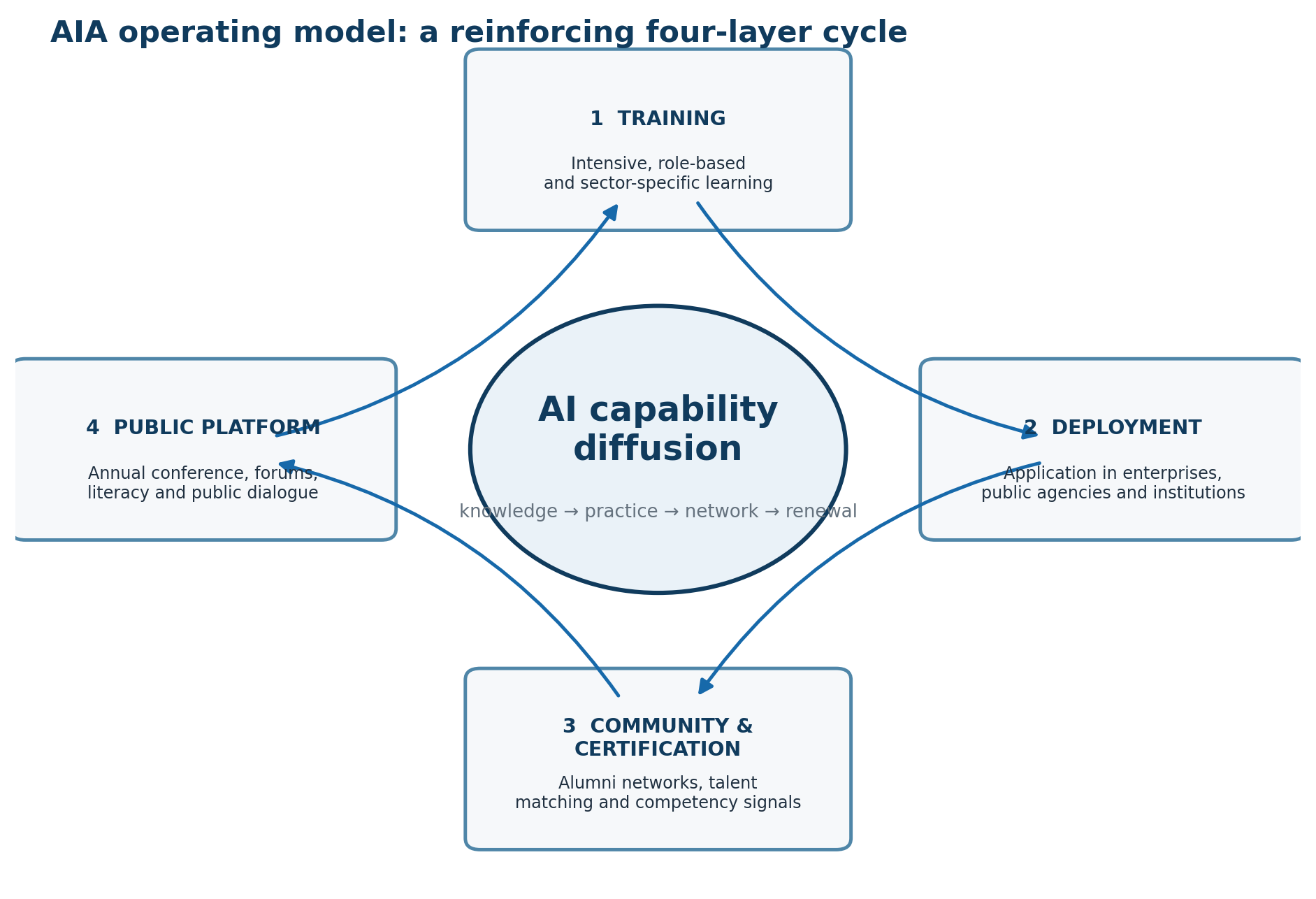
Figure 2. AIA operating model: a reinforcing cycle from learning to diffusion
Source: AIA program structure, 2026. [12]
4. Scale Matters, but Diffusion Matters More
Eight years of growth are one measure of demand for this intermediary model. The Academy trained 2,700 people in its first year and more than 6,000 within two years. By July 2026 the Academy had 13,140 cumulative alumni, 167 cohorts, more than 2,300 alumni enterprises, and participation across 15 major industries. [3][12]
The numbers matter, but they are not the best measure of impact. The real value lies in diffusion. AIA participants return to manufacturing lines, hospitals, financial institutions, service companies, technology firms, universities, and government agencies. Some become technical practitioners; others become project sponsors, translators, governance leads, or internal champions. The unit of impact is not the learner alone but the organizational network around the learner.
The Academy has therefore come to work as a node in an ecosystem rather than as a training provider. Courses produce practitioners; practitioners produce cases; cases enter communities and forums; forums create new partnerships and new competency needs; certifications and alumni networks extend the life of the original learning experience.
The Taiwan AI Academy Annual Conference illustrates this broader role. The conference has become an annual cross-sector platform covering AI policy, safety, digital twins, agentic AI, robotics, and industry cases, bringing together technology, industry, academia, and public-sector participants. [13] Its ninth edition, held on 18 August 2026 under the theme of Taiwan AI Sovereignty and International Partnership, was attended by Vice President Hsiao Bi-khim and served as the platform for the release of the National AI Infrastructure initiative. [16]
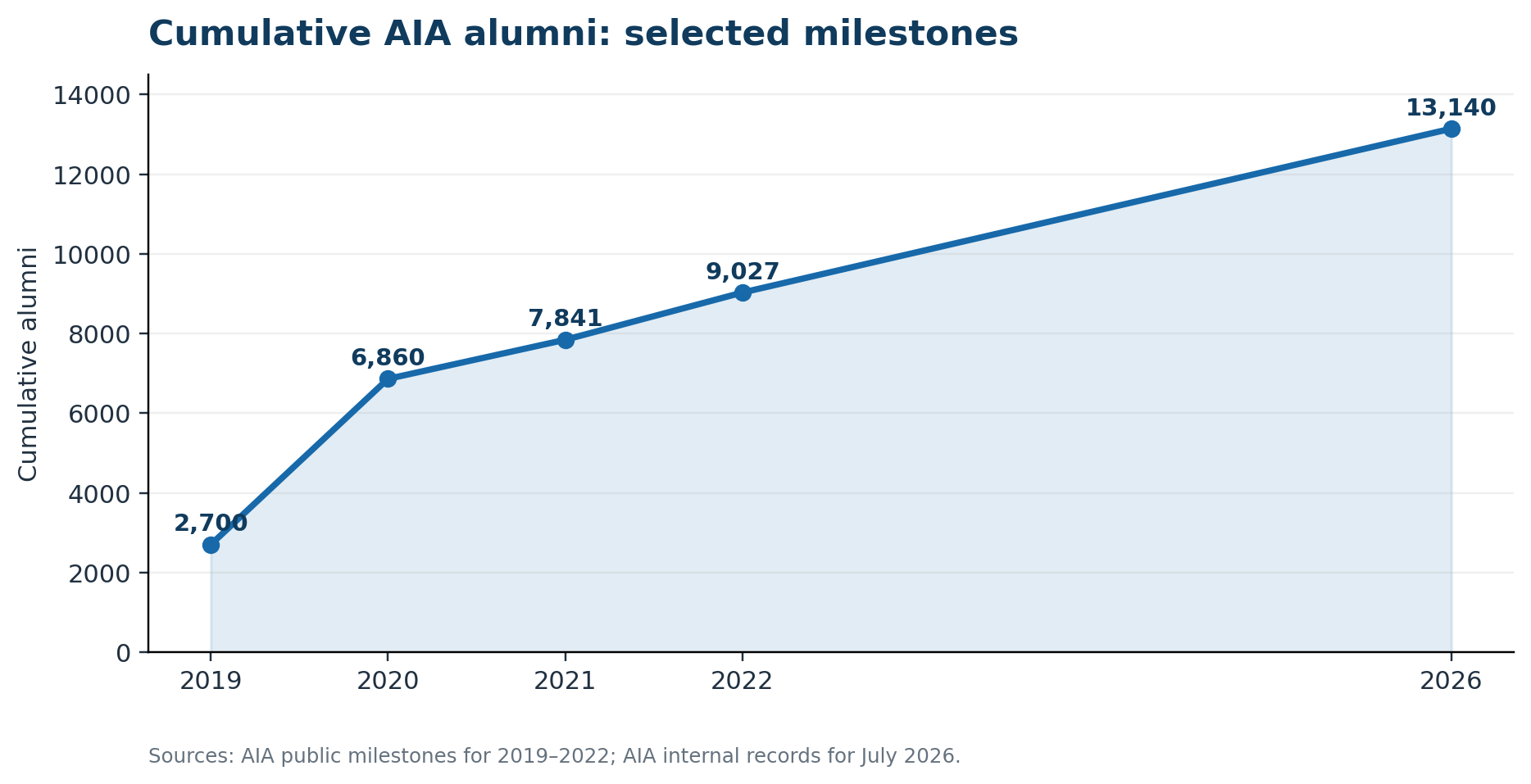
Figure 3. Cumulative AIA alumni: selected milestones
Source: AIA public and internal records (till July 2026). [3][12]
5. Building an AI-Ready Public Workforce
Governments occupy a uniquely demanding position in the AI transition. They are regulators, purchasers, operators, data stewards, and employers. Public officials must therefore understand AI not only as a technology, but also as a source of administrative opportunity, legal responsibility, public risk, and institutional change.
The OECD’s 2026 policy brief on building an AI-ready public workforce emphasizes that internal capability is essential for compliance, accountability, and alignment between AI use and institutional objectives. It also notes that public-sector adoption requires differentiated training: foundational AI skills for all staff, strategic knowledge for leaders, and deeper technical skills for digital and data professionals. [10]
AIA’s work with Taiwan’s public sector reflects this need. By 2026, 732 senior officials at civil-service grade 12 or above had taken part in the Academy’s AI education and executive programs, and AIA had supported 31 ministries and agencies in work related to implementation of the Artificial Intelligence Basic Act. [12]
This work matters because legislation does not implement itself. High-level principles must be translated into procurement rules, workforce practices, risk frameworks, data governance, sector guidance, and everyday decisions. A non-regulatory intermediary such as AIA can add value here: not by displacing the competent authorities, but by helping institutions build the human capability that responsible implementation requires.
6. AI Democratization: From Specialist Skill to Social Capability
One of AIA’s two central visions is AI Democratization, a term that deserves to be understood substantively. It does not simply mean giving more people access to a chatbot. Access without literacy can widen inequality, amplify misinformation, and create new security or privacy risks. Democratization therefore requires access, understanding, agency, and responsibility.
International evidence increasingly supports this reading. The OECD notes that while advanced AI professionals remain essential, general AI literacy will be necessary for a much wider share of the workforce. It also warns that lower-skilled adults and workers most exposed to automation are often least likely to participate in training, making accessibility and inclusion central policy concerns. [2]
AIA’s recent citizen AI literacy programs demonstrate how this vision can operate at scale. In 2025, AIA and Meta launched the “Good Use of AI” responsible AI literacy initiative, built around open educational materials, scenario-based exercises, teacher training, and localized examples. The materials were co-created and tested with input from more than 3,000 citizens, experts, students, and educators. [6][7]
By 2026 the broader citizen AI literacy initiative had recorded more than 95,000 participant engagements in AI outreach activities, more than 7,000 requests for learning materials, over 30 partner organizations, and more than 640 seed instructors. A responsible-AI course developed with Taiwan’s Civil Service Development Institute reached more than 86,000 learners by July 2026. [7] Two forms of external recognition are also relevant. In 2026, the Ministry of Digital Affairs listed the responsible AI literacy materials developed with Meta among the recommended learning resources in version 3.0 of its AI Industry Talent Guidelines, and AIA’s literacy-level and engineering-level certifications were included in the certification list published under the government’s guidelines for AI capability in the civil service. [17][18]
In parallel, AIA serves as the Taiwan partner for the second phase of the AI Opportunity Fund: Asia Pacific, an initiative supported by AVPN, Google.org and the Asian Development Bank. During the first phase, AIA and three local partner organizations trained more than 20,000 learners, including migrant workers, university students, teachers, nonprofit workers, and people across diverse occupations. [14]
Their significance goes beyond sponsorship: they are built around co-design and localization. What matters about them is co-design and localization. Global partners contribute resources, frameworks, and networks; AIA translates them into Taiwan-specific materials, instructor systems, and community pathways. This is a repeatable model for international AI education cooperation.
AI Democratization is not “AI for everyone” in the sense of universal access alone. It is the capacity for everyone to use AI with judgment.
7. Industry AI-ization: Turning AI into Productivity
The second long-standing AIA vision is Industry AI-ization: embedding AI into the operating fabric of Taiwan’s economy. This matters because Taiwan’s competitive strength rests on dense industrial ecosystems—semiconductors, electronics, machinery, healthcare, finance, logistics, retail, and thousands of small and medium-sized enterprises.
Industrial AI transformation is often misdiagnosed as a technology acquisition problem. Organizations buy model access, copilots, or automation tools and then ask employees to “use AI.” But transformation occurs only when the organization changes how work is performed, how decisions are made, how knowledge is captured, and how humans and AI systems divide responsibility.
The chain therefore runs: business scenario → workflow → data → model → agent → people → governance → economic value. A company that adds AI but leaves the underlying process untouched may improve local productivity without changing the system. The larger opportunity is to redesign the system.
This is also where Taiwan’s domain expertise becomes a strategic asset. Advanced manufacturing contains decades of tacit knowledge held by engineers, technicians, and experienced operators. Healthcare, financial services, and logistics also hold specialized knowledge of their own. If that knowledge can be structured, preserved, and connected to AI systems, it can become a form of digital capital.
AIA’s contribution should therefore extend beyond adding courses. It can codify Taiwan’s accumulated adoption experience into sectoral AI playbooks, AI readiness assessments, AI product-management competency frameworks, governance patterns, and reusable implementation cases. The transition is from training provider to methodology provider—and eventually to a platform that helps institutions learn from one another.
8. The AI Basic Act: From Legal Principle to Governance Translation
Taiwan’s Artificial Intelligence Basic Act was promulgated on 14 January 2026. The Act sets out seven basic principles for the research, development, and application of AI: sustainability, human autonomy, privacy protection and data governance, security, transparency and explainability, fairness, and accountability. Its stated purposes include human-centric AI development, protecting fundamental rights, digital equity, and international competitiveness. It explicitly calls for appropriate education and training to reduce digital divides and help citizens adapt to AI-driven change. [8] A June 2026 Taiwan and the Global AI Report frames this as a “principles-plus-implementation” model, with safety serving as an enabler of scale and statutory guardrails translated into risk classification, evaluation, and sector-specific rules. [19]
The broader national policy environment points in the same direction. Taiwan’s 10 new AI infrastructure initiatives span smart applications, key technologies, and digital infrastructure; official statements frame a 2040 ambition that includes more than NT$15 trillion in output value, 500,000 AI-related jobs, and three international-level AI laboratories. For AIA, this implies that talent development must connect to a much larger national capability system rather than remain a stand-alone education function. [9][15]
The Act changes what AI capacity building is for. AI literacy is no longer merely a professional advantage; it is part of the institutional capacity required to implement AI policy. Enterprises and public institutions need people who can interpret risk, understand accountability, handle data appropriately, evaluate AI outputs, and decide where human oversight is necessary.
This opens a role for AIA in governance translation. AIA is not a regulator and should not become one. Its comparative advantage lies in turning high-level principles into organizational capability: training for boards and managers, role-based competency frameworks, responsible-use guidance, practical cases, risk-aware implementation methods, and common language across technology and non-technology stakeholders.
Governance, in other words, is not a layer added after innovation; it is part of how AI systems are designed to operate. Organizations that learn this early move faster, because trust, accountability, and deployment readiness are built in rather than repaired after a failure.
9. NAII: From Talent Infrastructure to Strategic AI Capability
By 2026, AIA’s experience had led to a further conclusion: talent remains fundamental, but talent alone cannot secure long-term strategic AI capability. Advanced AI increasingly depends on an integrated system of people, data, models, computing infrastructure, cybersecurity, governance, and international networks.
On 18 August 2026, AIA released the National AI Infrastructure (NAII), titled “Securing AI Sovereignty Across Taiwan’s Strategic Domains.” The signatory list, updated on 22 August, includes 20 leaders and experts from academia, research institutions, technology companies, economic and policy organizations, government, and international institutions. [11]
NAII begins from a realistic view of Taiwan’s position. The global AI frontier is dominated by proprietary frontier models and open-weight frontier models that Taiwan does not control. Open-weight models are valuable because they enable local derivative systems, but derivation alone does not necessarily produce long-term sovereignty. NAII therefore identifies a third path: domain-specific foundation models that Taiwan can develop, maintain, and control in strategic fields where it already possesses deep industrial or scientific advantages. [11]
The initiative proposes models on the order of approximately 100 billion parameters as one possible scale. Where sufficient domain data exists, development could begin from scratch; where it does not, training could continue from an open-weight model. The test is not whether every component is indigenous, but whether Taiwan retains long-term control over the capabilities it judges worth sustaining. [11]
This is a pragmatic definition of AI sovereignty. Sovereignty does not mean isolation or technological autarky. For a country constrained by compute, energy, data, and scarce frontier talent, international partnership can be a mechanism for sovereignty rather than its opposite.
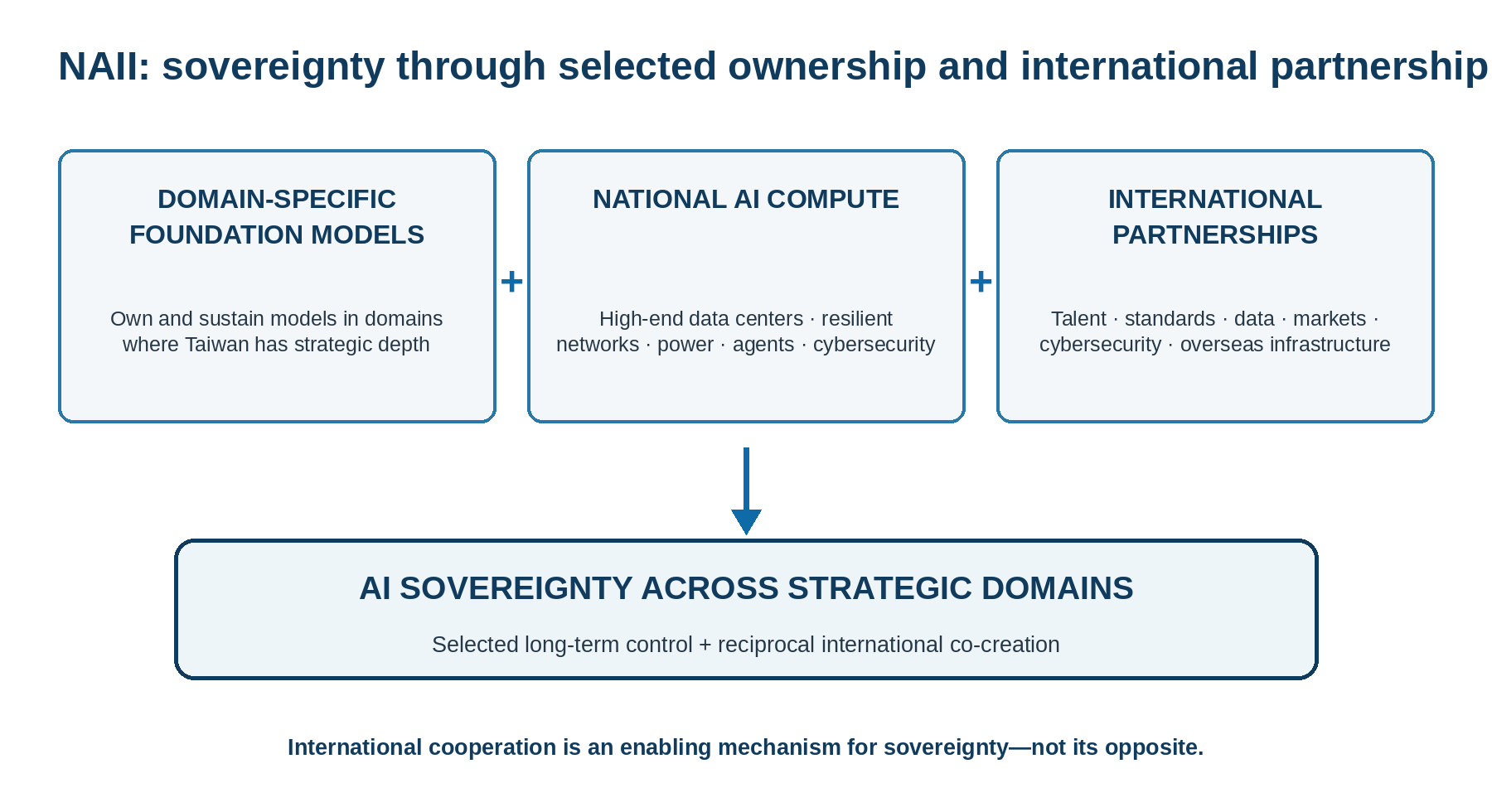
Figure 4. NAII: sovereignty through selected ownership and international partnership
Source: National AI Infrastructure (NAII), 18 August 2026; signatories updated 22 August 2026. [11]
10. International Co-Creation Is Part of Sovereignty, Not Its Opposite
NAII calls for coordinated international engagement across talent, strategic technologies, applications, and services. It asks Taiwan to begin by identifying what it can contribute: technology, industrial services, education and training, domain know-how, and computing infrastructure. In return, Taiwan should seek complementary capabilities, including advanced AI talent, participation in standards and industrial alliances, foreign adoption of Taiwan-developed systems and certifications, data collaboration, joint cybersecurity defense, and access to overseas data-center capacity. [11]
The reciprocity matters. Taiwan’s AI strategy should not be framed as a choice between “domestic autonomy” and “international dependence.” A more resilient model is strategic interdependence: retain meaningful control over selected critical capabilities while building deep partnerships in areas where complementary scale or expertise is necessary.
AIA’s existing international education partnerships offer a useful institutional precedent at a smaller scale. In its literacy work, international resources are not simply imported. They are localized, tested, translated, and diffused through Taiwan’s own networks. NAII applies the same principle on a larger scale: global partnership, Taiwanese domain knowledge, and controlled strategic capability.
The proposed computing agenda further illustrates this systems logic. NAII calls for government-owned high-end AI computing infrastructure, while explicitly allowing public-private construction and operation models. It proposes scaling domestic facilities from today’s tens-of-megawatts level toward several hundred megawatts in the near term and gigawatt scale by 2030. Such facilities could support long-horizon agents, cybersecurity red-teaming, government applications, and university research and education. These are the initiative's recommendations, not current government commitments. [11]
The underlying principle is more enduring than any specific GPU count or megawatt target: Taiwan should not remain only a manufacturer of AI computing systems. It should also become an advanced user, developer, and co-creator of the capabilities those systems make possible.
11. The Missing Top of the Talent Pyramid
AI Democratization expands the base of capability. NAII highlights a different shortage at the top. Taiwan still has few people with hands-on experience in large-scale model training, advanced agents, distributed systems, cybersecurity, open-source communities, frontier algorithms, and the policy implications of AI for industry and work. [11][12]
This high-end talent gap cannot be solved by mass literacy programs alone. It requires access to advanced computing, participation in frontier projects, international research collaboration, experienced mentors, open-source communities, industrial datasets, and opportunities to operate systems at meaningful scale.
Taiwan therefore needs a talent pyramid rather than a single pipeline. At the base are AI-literate citizens and workers. Above them are AI-enabled domain professionals, transformation leaders, engineers, and architects. At the top are advanced model, systems, infrastructure, cybersecurity, and research specialists. Each level requires a different development model, but all levels must connect.
Infrastructure and talent reinforce one another. Advanced compute attracts advanced talent. Advanced talent builds better models and systems. Real industrial deployment generates valuable problems and data. Those projects create new cases and curricula. The education system then produces the next generation of talent. A country that can close this loop will learn faster than one that treats education, infrastructure, and industrial policy as separate domains.
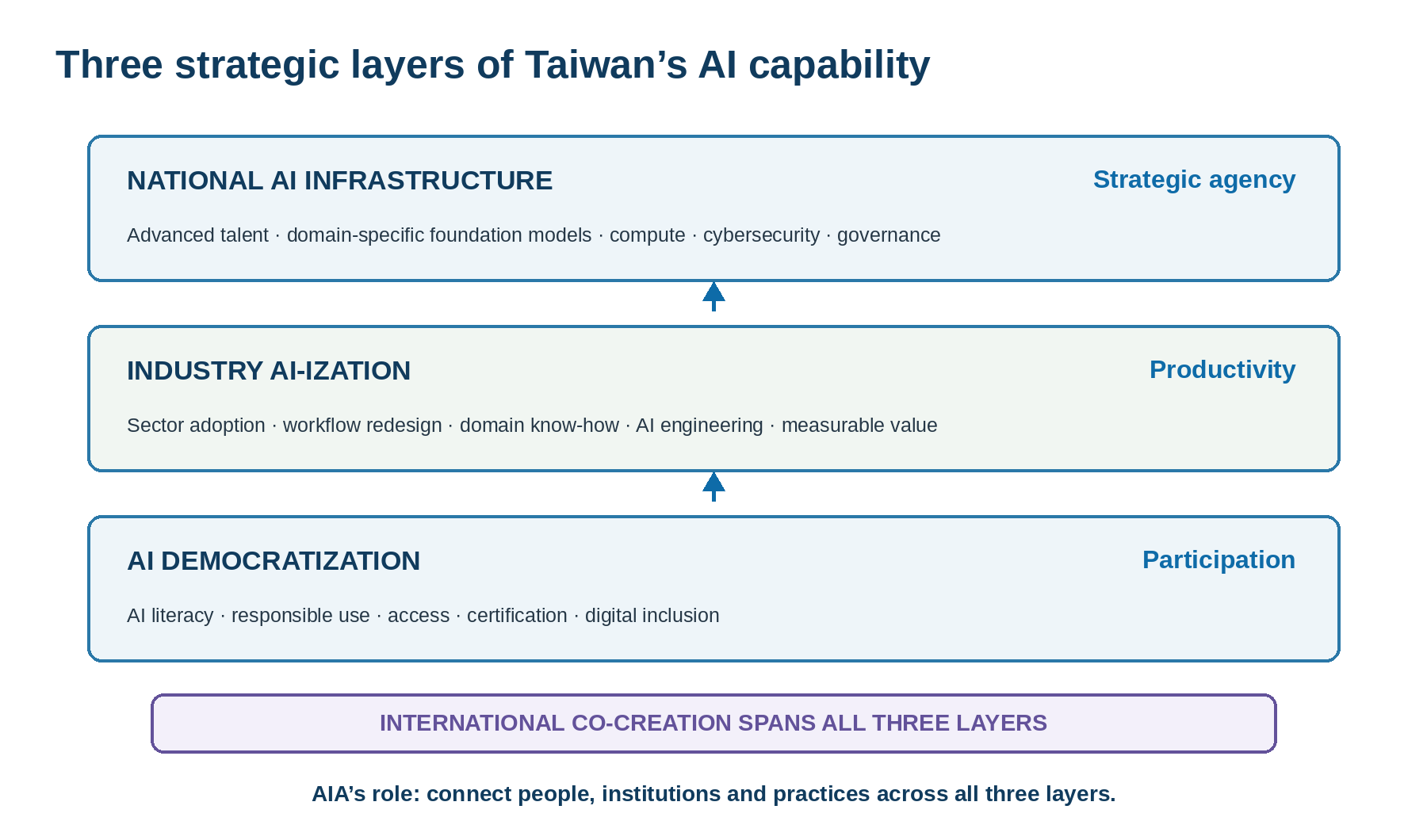
Figure 5. Three strategic layers of Taiwan’s AI capability
Source: Taiwan AI Academy analysis, drawing on its 2026 strategic briefing and NAII. [11][12]
12. Toward a Global Center for AI Talent Education and Industrial Learning
Taiwan’s next opportunity is not simply to become another location where people can study artificial intelligence. Many countries have excellent universities and large AI laboratories. What sets Taiwan apart is that advanced AI education can be embedded inside one of the world’s densest technology and manufacturing ecosystems.
Few places combine world-leading semiconductor and ICT capabilities, advanced manufacturing clusters, deep engineering talent, a dense SME economy, high-quality healthcare and research institutions, and a democratic environment increasingly focused on trustworthy AI governance. This combination allows Taiwan to teach something distinctive: not only how AI works, but how AI is deployed under real industrial constraints.
The international proposition can therefore be stated simply: “Come to Taiwan not only to study AI but also to learn how it works in the real economy.” International participants could combine structured education with enterprise cases, factory and laboratory visits, applied projects, governance discussions, and collaboration with domain experts.
AIA can build toward this through English-language modular curricula, international case repositories, train-the-trainer programs, visiting practitioners, mutually understandable competency frameworks, joint executive programs, and an annual forum that connects AI talent, industry transformation, and governance.
The goal is not internationalization for visibility alone. It is to make Taiwan a node where AI talent is jointly cultivated, applied knowledge is exchanged, responsible-use practices are tested, and strategic partnerships are formed.
|
|
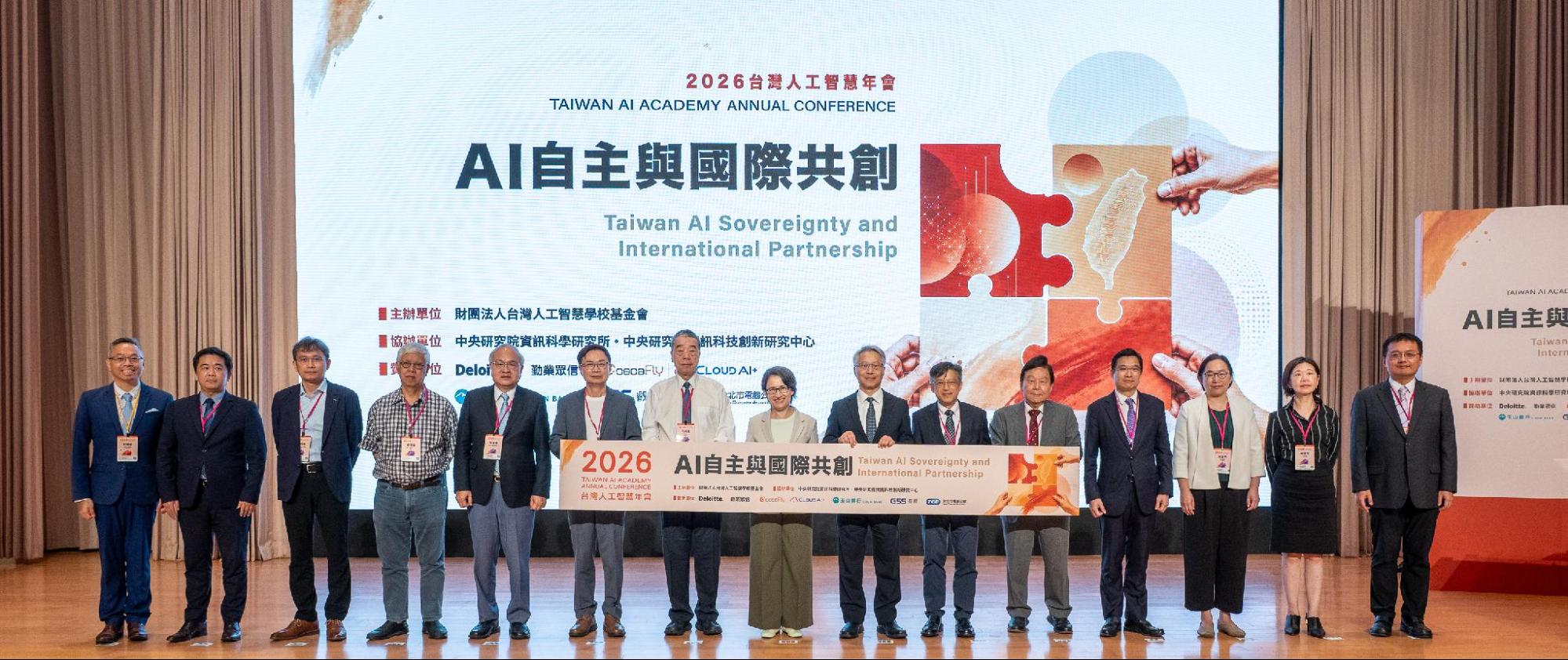
Photo 2. Taiwan AI Academy Annual Conference 2026: AI sovereignty and international partnership.
Photo courtesy of Taiwan AI Academy.
13. Making Taiwan a Trusted Partner for Integrated AI Transformation
Taiwan AI Academy is already converting Taiwan’s manufacturing and systems experience into transferable capability—literacy, engineering practice, governance, certification, and train-the-trainer models. The strategic question is no longer only how Taiwan exports chips, servers, and components, but how it becomes a trusted partner for AI hardware–software transformation, co-creating operational value with international partners while strengthening mutual competitiveness and resilience.
Taiwanese enterprises and institutions are accumulating experience in predictive maintenance, process optimization, AI-assisted engineering, knowledge management, healthcare AI, cybersecurity, service automation, governance, and agent-based workflows. Much of it remains tacit and invisible outside Taiwan. If systematically documented, anonymized where necessary, translated, and converted into teaching cases, playbooks, and certification frameworks, it becomes transferable.
This is a form of soft power. A factory capability stays local; a methodology travels. A domestic training program can become a train-the-trainer package. A governance practice can become a cross-border reference model. A successful industry use case can become part of a global curriculum.
NAII explicitly identifies foreign adoption of Taiwan-developed AI systems, applications, and certification programs as a desired outcome of international partnership. [11] AIA’s role in such a future is not to own every system, but to help convert Taiwan’s experience into educational, professional, and institutional forms that can be shared internationally.
This would move Taiwan along a strategic progression: from technology exporter, to knowledge exporter, to AI capability partner.
14. A Strategic Agenda for the Next Phase
The next phase of AIA should be judged less by how many new course titles it launches and more by whether it strengthens Taiwan’s AI capability system. Six priorities follow from the Academy’s experience, the AI Basic Act, current national policy, and the NAII agenda.
|
Priority |
Strategic objective |
Illustrative actions |
|
1. Establish a national AI literacy baseline |
Make responsible AI use a common capability across the workforce and society |
Open resources; AIATC literacy pathway; teacher and public-sector training; inclusion programs |
|
2. Accelerate Industry AI-ization |
Turn AI adoption into measurable productivity and organizational redesign |
Sector playbooks; AI readiness; AI PM; workflow redesign; industrial case repositories |
|
3. Deepen advanced talent |
Close the gap in frontier engineering and systems capability |
Model training; agents; systems; cybersecurity; open-source participation; international fellowships |
|
4. Build governance translation capacity |
Operationalize the AI Basic Act and responsible AI principles |
Board education; risk frameworks; role-based governance; implementation cases; cross-sector guidance |
|
5. Internationalize through co-creation |
Make Taiwan a node for joint talent development and applied AI learning |
English modules; joint programs; train-the-trainer; visiting experts; annual international forum |
|
6. Connect talent with national infrastructure |
Ensure human capability and national AI infrastructure reinforce each other |
Access to strategic compute; domain-model projects; talent pipelines; international partnerships |
Conclusion: An AI-Ready Nation Is Built as a System
The Taiwan AI Academy began with a simple observation: Taiwan had abundant industrial problems and technical potential, but too few people who could connect domain knowledge with artificial intelligence. That insight led to an institutional experiment in 2017 and an Academy that formally began teaching in 2018.
Eight years later, the challenge is broader. Taiwan must build capability across society, industry, and the state. It needs citizens who can use AI with judgment; professionals who can redesign work around it; engineers who can build and integrate systems; leaders who can govern risk and investment; and advanced specialists who can develop strategically important models and infrastructure.
The resulting architecture can be summarized in three layers. AI Democratization creates participation. Industry AI-ization creates productivity. National AI Infrastructure creates strategic agency. International co-creation runs across all three.
Taiwan already occupies an indispensable position in the physical infrastructure of global AI. Its next ambition should be to build an equally distinctive position in the human, industrial, institutional, and intellectual infrastructure of AI.
Success will not be measured by the number of models Taiwan can claim, nor by the number of courses any single institution can deliver. It will lie in whether people, domain knowledge, models, compute, governance, and international partnerships reinforce one another strongly enough to create durable capability.
The strategic question is therefore no longer whether Taiwan can participate in the AI revolution. It already does. The better question is which parts of the global AI future Taiwan can uniquely help build, meaningfully control, and share with the world.
AI Democratization creates participation. Industry AI-ization creates productivity. National AI Infrastructure creates strategic agency. Together, they create national AI capability.
About the authors. Min-Shun Richie Tsai is Provost of Taiwan AI Academy. Ling-Jyh Chen is Chief Executive Officer of Taiwan AI Academy. The views expressed here are those of the authors.
Notes on Data and Terminology
• Operational figures for the Academy are drawn from AIA’s own records as of July 2026.
• NAII is an AIA-initiated, multi-signatory policy initiative. Its proposed model sizes, compute capacities, and infrastructure targets are recommendations, not statements of current Taiwan government commitments.
• AIA’s own AI Talent Certification (AIATC) is distinct from its international literacy partnerships. AIA collaborates with Meta on responsible AI literacy and participates in the Google.org-supported AI Opportunity Fund through AVPN and the Asian Development Bank; these initiatives strengthen the broader literacy ecosystem but do not constitute joint ownership of AIA certification.
• “Industry AI-ization” translates AIA’s long-standing concept of 產業 AI 化. In international prose, “industrial AI transformation” is used interchangeably where it improves readability.
References
[1] World Economic Forum. (2025). Future of Jobs Report 2025. Geneva: World Economic Forum. https://www.weforum.org/publications/the-future-of-jobs-report-2025/
[2] OECD. (2025). Bridging the AI skills gap: Is training keeping up? OECD Publishing, Paris. https://doi.org/10.1787/66d0702e-en
[3] Taiwan AI Academy. (2020). Promoting AI talent engineering to enhance industrial competitiveness. https://aiacademy.tw/aia-history-20200418/
[4] Taiwan AI Academy. Vision and Mission / founding background. https://aiacademy.tw/vision/ ; English institutional overview: https://en.aiacademy.tw/about/
[5] Taiwan AI Academy. (2026, May 18). AIA Talent Certification (AIATC) website launch: Use AI, Build AI, and Govern AI competency pathways. https://aiacademy.tw/news-aiatc-official-website-launch/
[6] Taiwan AI Academy. (2025, September 24). “Good Use of AI” responsible AI literacy initiative with Meta. https://aiacademy.tw/good-ai-2025/
[7] Taiwan AI Academy. (2026). Citizen AI Literacy Program: impact and responsible AI learning resources. https://aiforeveryone.aiacademy.tw/about/impact ; https://aiforeveryone.aiacademy.tw/responsibleAI
[8] Artificial Intelligence Basic Act (2026). Promulgated by Presidential Order Hua-Zong-Yi-Yi-Zi No. 11500001671 on 14 January 2026 and effective upon promulgation; competent authority: National Science and Technology Council, Taiwan. https://law.nstc.gov.tw/EngLawContent.aspx?id=10099&lan=E
[9] Office of the President, Republic of China (Taiwan). (2025, November 20). President Lai attends opening of Google’s AI Infrastructure Engineering Center in Taiwan. https://english.president.gov.tw/News/7045
[10] OECD. (2026). Building an AI-ready public workforce: Implications and strategies. OECD Publishing, Paris. https://doi.org/10.1787/b89244c7-en
[11] Taiwan AI Academy. (2026, August 18; signatories updated August 22). National AI Infrastructure (NAII): Securing AI Sovereignty Across Taiwan’s Strategic Domains. AIA-initiated multi-signatory policy initiative. Taipei: Taiwan AI Academy.
[12] Taiwan AI Academy. (2026). Taiwan AI Academy: Democratizing AI Talent and advancing Taiwan as a global AI education hub. Strategic briefing for international industry, government, academic, research, and media audiences. Taipei: Taiwan AI Academy.
[13] Taiwan AI Academy. (2025). Taiwan AI Academy Annual Conference 2025. https://conf2025.aiacademy.tw/
[14] Taiwan AI Academy. (2026, January 23). AIA selected again as Taiwan representative organization for the AI Opportunity Fund: Asia Pacific, supported by AVPN, Google.org and the Asian Development Bank. https://aiacademy.tw/news-2026-aia-ai-opportunity-fund/
[15] Executive Yuan, Republic of China (Taiwan). (2025–2026). Policy materials on the New Ten Major AI Infrastructure Projects, including smart applications, key technologies, and digital infrastructure. https://english.ey.gov.tw/ ; https://www.ey.gov.tw/
[16] Taiwan AI Academy. (2026). 2026 Taiwan AI Academy Annual Conference: Taiwan AI Sovereignty and International Partnership, 18 August 2026, Taipei. https://conf2026.aiacademy.tw/
[17] Ministry of Digital Affairs, Taiwan. (2026). AI Industry Talent Guidelines, version 3.0, recommended learning resources. https://moda.gov.tw/ADI/news/latest-news/19724
[18] Directorate-General of Personnel Administration, Executive Yuan, and Ministry of Digital Affairs, Taiwan. (2026). AI Civil Service Talent Guidelines and the recognized certification list for the Common Core AI Competency Certification for public servants. https://www.dgpa.gov.tw/ ; https://moda.gov.tw/
[19] Yu, Chia-Mu, Chang-Chiang Hsieh, and Ting-Chi Liu. (2026, June). The Enactment of Taiwan AI Basic Act: Building Trustworthy AI for Safety and Innovation. Taiwan and the Global AI Report, June 2026 issue. Singapore: Taipei Representative Office in Singapore. Edited by Chen-Yuan Tung and Yen-Kuang Chen.
- Major organization:
Taiwan Artificial Intelligence Academy Foundation - Co-organizations:
Institute of Information Science and Research Center for Information Technology Innovation - Sponsors:
FPG, CHIMEI, Inventec, EMC, MediaTek and AUO





- Business Time : Tue.~Sat. 09:00~18:00
- Tel:+886 2-8512-3731
- Email:hi@aiacademy.tw
- Address:
14F, No. 141, Sec. 1, Zhongshan Rd., Banqiao Dist., New Taipei City 220684, Taiwan (R.O.C.)
Copyright © Taiwan Artificial Intelligence Academy Foundation